Skip to Content
explora-guanacaste
  • Home
  • Tours & info
  • Shared Shuttle Services
  • Private Transfers
  • Airport Transfers
explora-guanacaste
      • Home
      • Tours & info
      • Shared Shuttle Services
      • Private Transfers
      • Airport Transfers

    Guanacaste Tree (Enterolobium cyclocarpum)

    The Guanacaste Tree is Costa Rica's National Tree and one of the most iconic species of the tropical dry forest. Known for its enormous umbrella-shaped canopy and distinctive ear-shaped seed pods, it provides shade, food, and shelter for countless species of wildlife while symbolizing strength, resilience, and the natural heritage of Guanacaste.

    Quick Facts

    FeatureInformation
    Scientific NameEnterolobium cyclocarpum
    Common NameGuanacaste Tree
    FamilyFabaceae
    Type🟢 Native Species
    OriginTropical America
    Height20–35 m (66–115 ft)
    FloweringFebruary–April
    FruitingMarch–June
    Native to Costa Rica✔️ Yes

    Identification


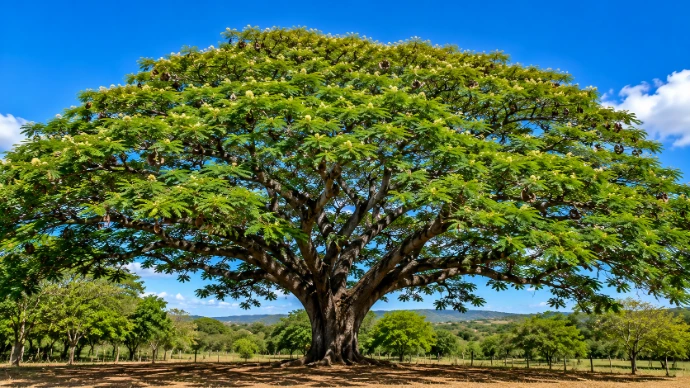
    The Guanacaste Tree is one of the largest and easiest trees to recognize in Costa Rica. Its massive umbrella-shaped canopy can spread over 30 meters (100 feet), providing shade for people, livestock, and wildlife alike.

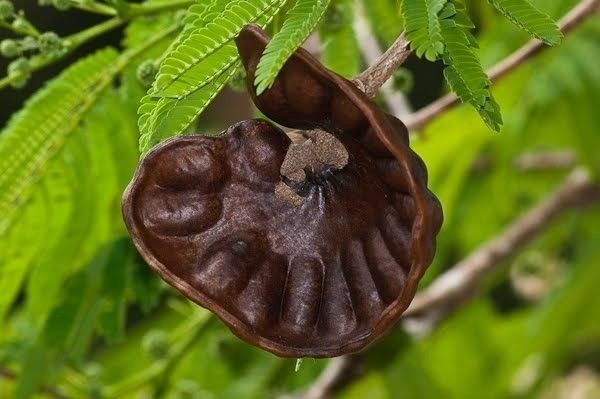
    Its thick gray trunk supports large horizontal branches covered with delicate fern-like leaves. Small greenish-white flowers develop into the tree's famous dark brown seed pods, which curl into the shape of a human ear.
    Read More

    Key Identification Features

    • Massive umbrella-shaped canopy
    • Thick gray trunk with broad spreading branches
    • Fine, fern-like compound leaves
    • Small greenish-white flowers
    • Distinctive ear-shaped seed pods
    • Large, rounded crown visible from great distances

    Habitat

    The Guanacaste Tree is a characteristic species of Costa Rica's tropical dry forest and thrives in warm climates with a pronounced dry season.

    It is commonly found in:

    • Tropical dry forests
    • Open pastures
    • River valleys
    • Agricultural lands
    • National parks
    • Rural landscapes

    Its extensive root system allows it to survive long periods of drought.

    Distribution

    The Guanacaste Tree is native to tropical America, ranging from Mexico to northern South America.

    In Costa Rica, it is especially abundant throughout Guanacaste and the Pacific lowlands, where it is considered one of the defining trees of the region.

    Flowering & Fruiting

    🌸 Flowering: February–April

    🍈 Fruiting: March–June

    The tree produces small clusters of fragrant flowers that attract numerous pollinators. Its large woody seed pods mature during the dry season and often remain on the tree for several months before falling to the ground.

    Ecological Importance

    The Guanacaste Tree is considered a keystone species in the tropical dry forest.

    Its enormous canopy provides shade and shelter for wildlife, while its flowers, leaves, and seed pods support a wide variety of animals throughout the year.

    Wildlife Visitors

    🐝 Native bees

    🦋 Butterflies

    🐦 Parrots

    🐦 White-throated Magpie-Jay

    🐦 Hoffmann's Woodpecker

    🐒 Howler Monkeys

    🐒 White-faced Capuchin Monkeys

    🦇 Fruit Bats

    🦌 White-tailed Deer
    .

    Traditional Uses

    Wood

    he wood is moderately lightweight, durable, and easy to work, making it valuable for:

    • Furniture
    • Cabinets
    • Interior woodwork
    • Canoes
    • Carvings
    • General construction

    Medicinal Uses

    Traditional medicine has used different parts of the tree for:

    • Respiratory ailments
    • Minor skin conditions
    • Digestive discomfort

    The bark has also been used in traditional herbal preparations.

    ⚠️ These traditional uses are based on local knowledge and should not replace professional medical advice.

    Conservation Status

    🟢 Least Concern

    Although the Guanacaste Tree remains widespread throughout its natural range, protecting tropical dry forests ensures that future generations can continue to enjoy this iconic species and the wildlife it supports.

    Interesting Facts

    • The Guanacaste Tree has been the National Tree of Costa Rica since 1959.
    • Its scientific name, Enterolobium cyclocarpum, refers to its distinctive circular, ear-shaped seed pods.
    • A mature tree can develop a canopy over 30 meters (100 feet) wide.
    • It is one of the largest shade trees in Central America.
    • As a member of the legume family, it helps enrich the soil by fixing nitrogen through beneficial bacteria associated with its roots.
    • Many Guanacaste Trees live for well over 100 years and become landmarks in rural communities.

    Nature Guide Tip

    When exploring Guanacaste, look for an enormous tree standing alone in open pastures with a broad, umbrella-shaped canopy. During the hottest part of the day, you will often find cattle, horses, monkeys, birds, and other wildlife resting beneath its shade. If you spot large, dark seed pods shaped like a human ear, you've found Costa Rica's famous Guanacaste Tree.

    Did You Know?

    • The Guanacaste Tree has been the National Tree of Costa Rica since 1959.
    • Its name comes from the Nahuatl words quauh (tree) and nacastl (ear), referring to its distinctive ear-shaped seed pods.
    • A mature Guanacaste Tree can develop a canopy more than 30 meters (100 feet) wide, making it one of the largest shade trees in Central America.
    • As a member of the legume family, it naturally enriches the soil by fixing nitrogen through beneficial bacteria in its roots.
    • Some Guanacaste Trees are estimated to live for well over 100 years, becoming important landmarks in rural communities.

    Documentation

    Designed for travelers

    We are a team of travel enthusiasts committed to enhancing your journey. Our services are designed for travelers seeking unique and enriching experiences.

    Contact Us

    Explora Guanacaste
    50 metros este y 50 metros norte de C.I.E KIDS MONTESSORI, Av. 1, Provincia de Guanacaste, Liberia, Chorotega, 50101

    • +506 8846 6565
    • booking@exploraguanacaste.com
    Follow us
    Copyright © Explora Guanacaste
    Powered by Odoo - Create a free website